News
CMCR Event Recap: Writing Smarter with AI and Publishing Better: Insights from Journal Editors
13 Oct 2026
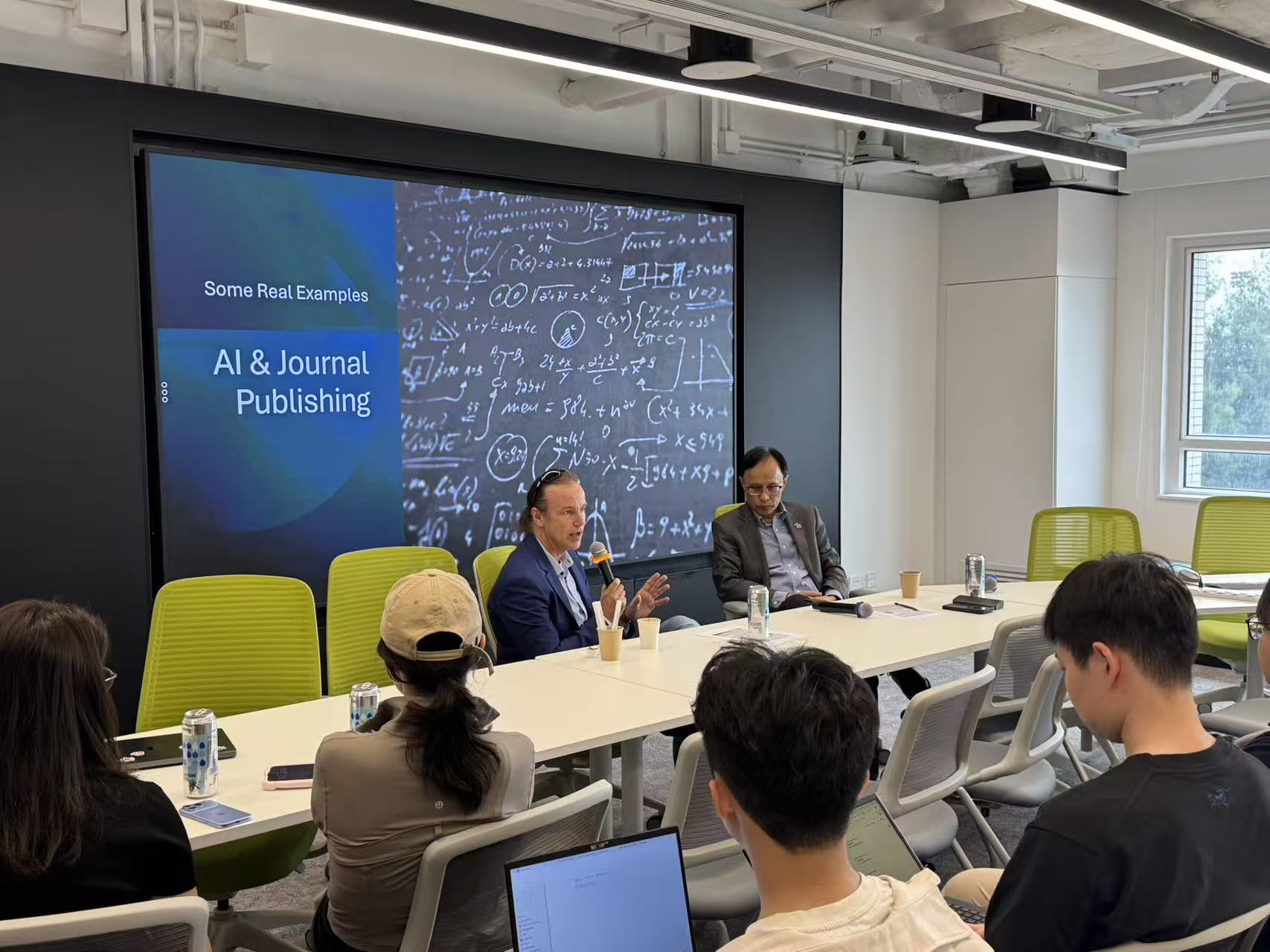
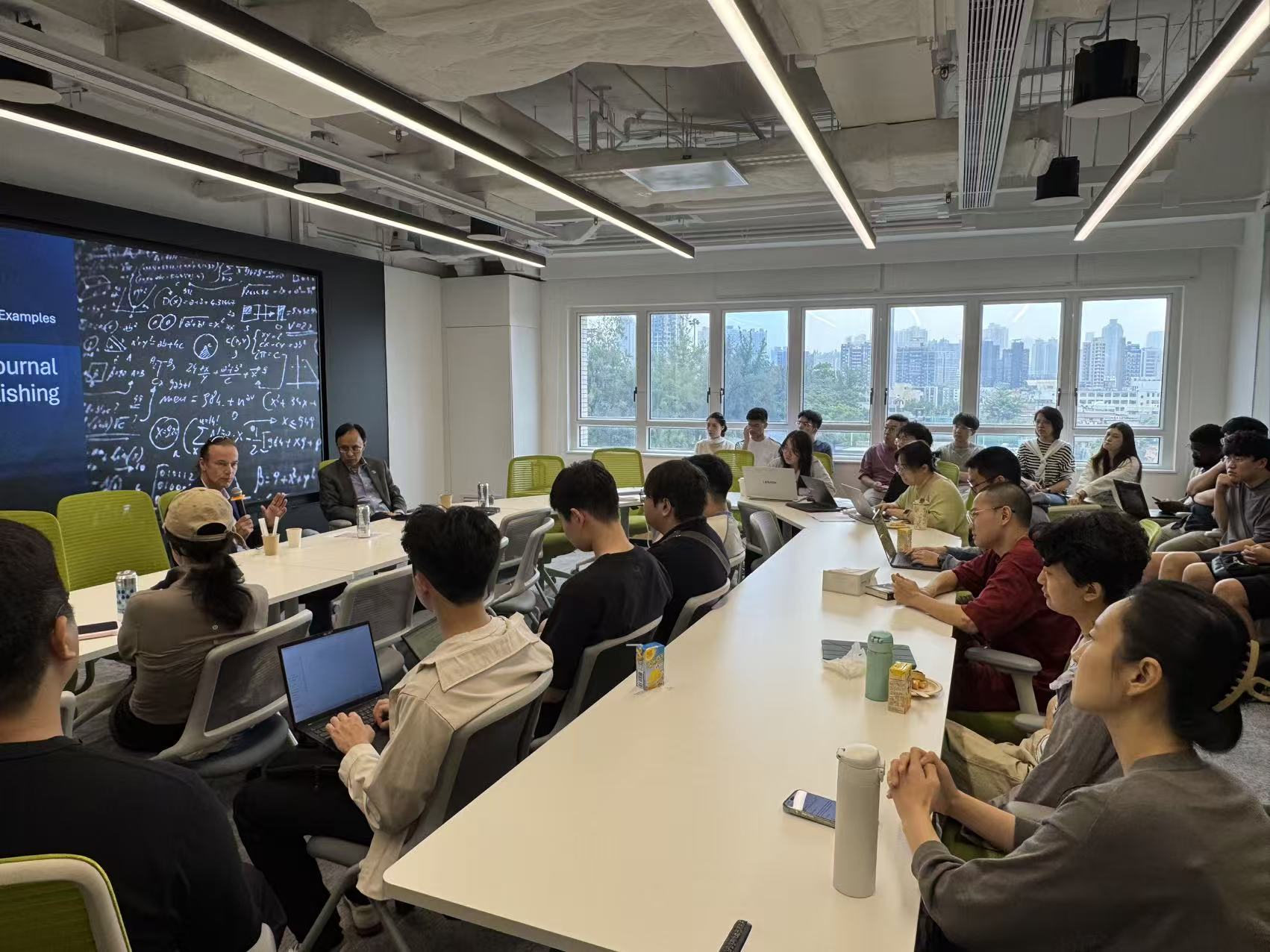
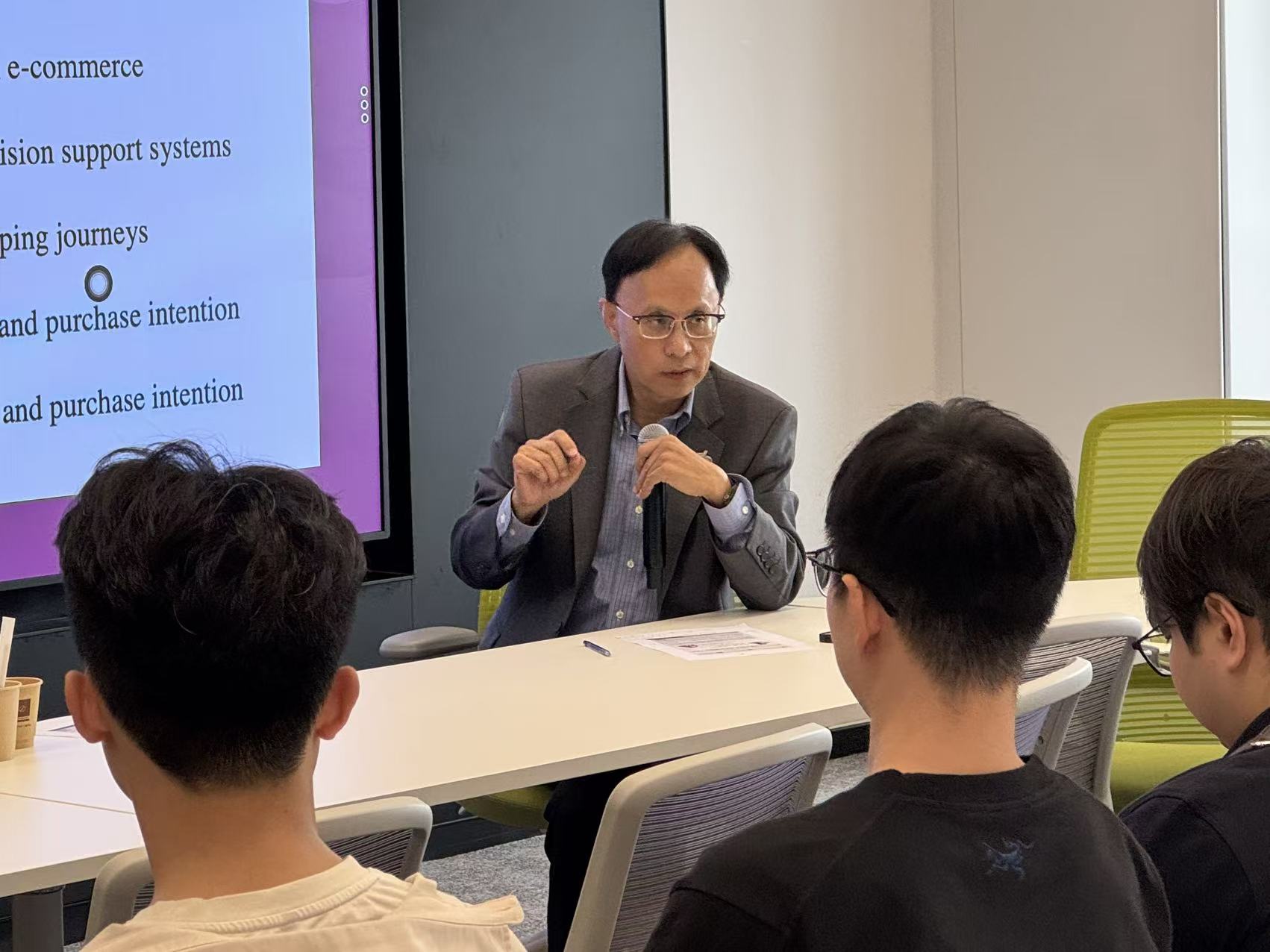
The Centre for Media and Communication Research (CMCR) at the School of Communication at Hong Kong Baptist University (HKBU) hosted an academic Research Dialogue titled “Writing Smarter with AI and Publishing Better: Insights from Journal Editors” on 13 October 2026.
The dialogue featured Professor Jörg Matthes, Professor of Communication Science at the University of Vienna and Editor-in-Chief of Communication Theory, alongside Professor Zhong Bu, Dean of the HKBU School of Communication and Senior Editor of Computers in Human Behavior. The session brought together faculty members and postgraduate researchers to examine the opportunities, editorial challenges, and ethical standards surrounding generative AI in scholarly publishing.
Rising Submissions and Editorial Rigor
The speakers reflected on the shifting landscape of academic publishing, noting how generative AI has accelerated manuscript preparation and notably increased submission volumes. Within this context, the editors discussed evolving editorial expectations, emphasizing that journals continue to prioritize substantive scholarly rigor and thoughtful theoretical grounding. They highlighted that meaningful research contributions rely fundamentally on solid research design, authentic domain expertise, and original knowledge creation, encouraging authors to focus on depth and disciplinary relevance throughout the publication journey.
AI for Intellectual Advancement, Not Shortcuts
A key consensus of the seminar was that researchers should use AI to foster cognitive advancement rather than mechanical efficiency. The panelists encouraged scholars to treat AI as an interactive sounding board to challenge assumptions, debate counterarguments, and refine logic, while strictly advising against uncritical text delegation and copy-pasting. In accordance with international publishing ethics, the speakers reiterated that human authors remain solely responsible for manuscript integrity and must maintain full transparency regarding any AI assistance.
Cultivating Scholarly Credibility and Voice
During the Q&A session, the discussion centered on managing publication pressure and developing authentic academic voices. The speakers advised researchers to prioritize quality and methodological rigor over publishing volume, noting that publishing substandard work ultimately compromises scholarly credibility. They encouraged early-career researchers to build linguistic proficiency through deep reading of high-standard literature, independently verify primary sources, and cultivate a unique intellectual identity that distinguishes their work in an AI-assisted academic environment.